

91 7909081916
On-Grid Solar Systems
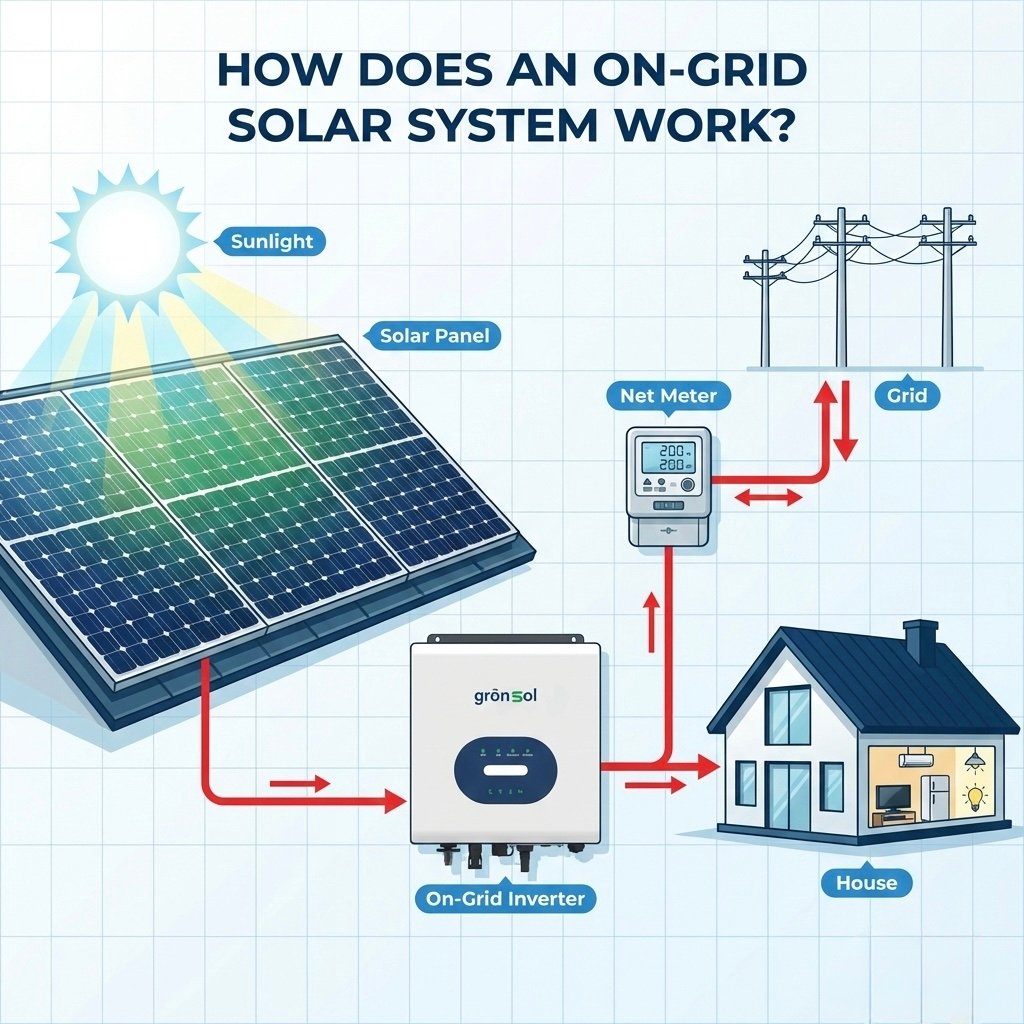
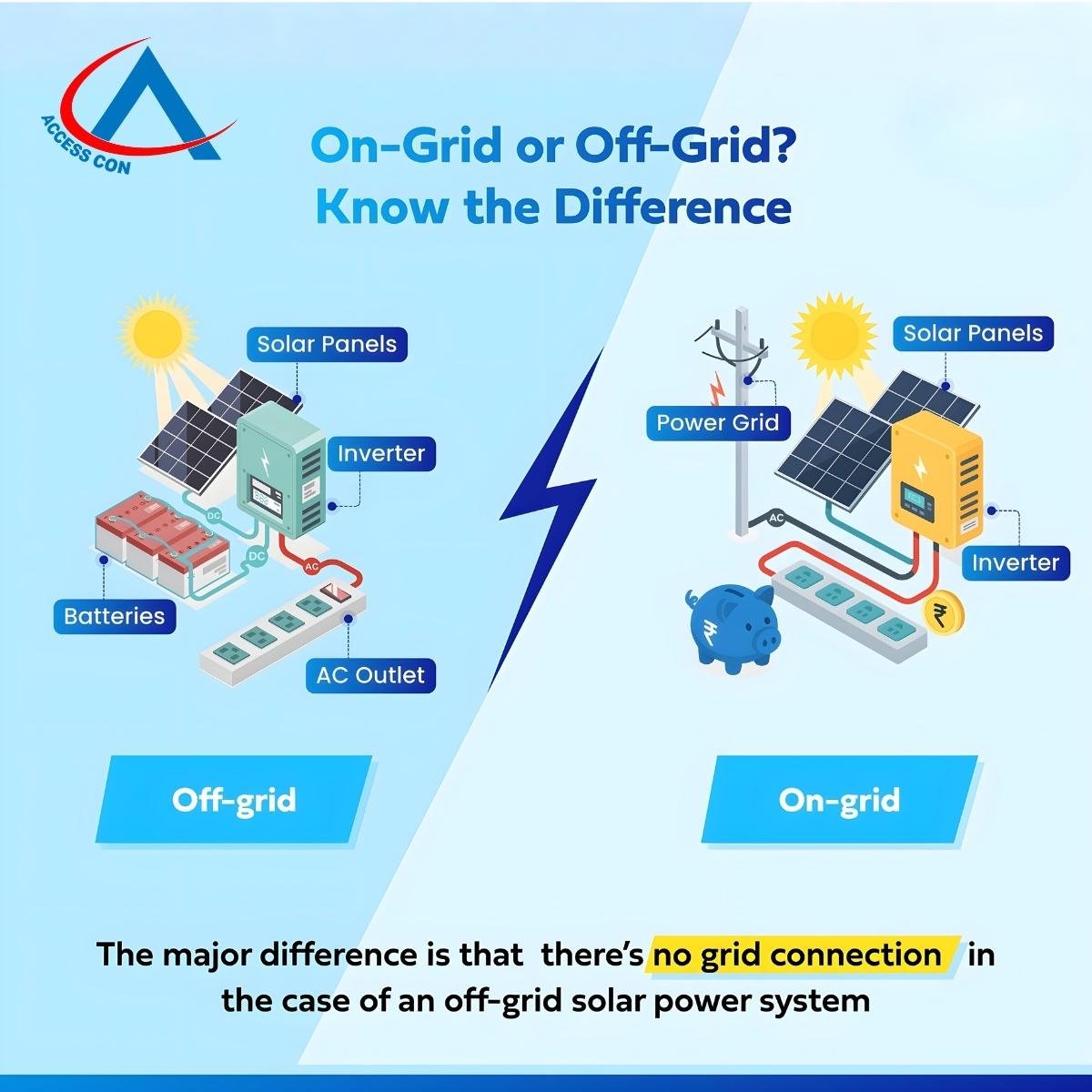
An on-grid (grid-tied) solar system is connected to the local utility grid. It generates electricity using solar panels, feeds your home appliances, and exports any excess power back to the grid through net metering. This is the most cost-effective solution for homes and businesses with regular electricity supply.
Subsidy & Financial Benefits (PM Surya Ghar Yojana):
Residential Subsidy: Homeowners can avail significant central financial assistance under the PM Surya Ghar Muft Bijli Yojana (up to ₹30,000 for 1 kW, ₹60,000 for 2 kW, and ₹78,000 for 3 kW systems).
Electricity Bill Savings: Cut your monthly power bills by up to 90% or zero out charges completely via net metering credits.
Quick ROI: The system typically pays for itself within 3 to 4 years through combined savings and subsidies.
Solar Generation: High-efficiency panels absorb sunlight and convert it into DC electricity.
Inverter Conversion: The solar inverter converts DC power into usable AC power for your household appliances.
Grid Export: Excess electricity generated during peak daylight hours is automatically sent to the utility grid, earning credits on your bill.
- Initial site inspection and energy consumption audit.
- Custom system design and subsidy documentation processing.
- Professional installation by certified engineers.
- Net meter installation and utility grid synchronization.
Capacity, Generation & Government Subsidy
| System Capacity | Daily Generation | Rooftop Space | PM Surya Ghar Subsidy | Best Suited For |
|---|---|---|---|---|
| 1 kW | 4 - 5 Units / Day | Approx. 100 sq. ft. | ₹30,000 | Small families (Bill under ₹1,500) |
| 1.5 kW | 6 - 7 Units / Day | Approx. 150 sq. ft. | ₹45,000 | Small to medium homes |
| 2 kW | 8 - 10 Units / Day | Approx. 200 sq. ft. | ₹60,000 | Medium families (Bill ₹2,000 - ₹3,000) |
| 3 kW & Above | 12+ Units / Day | Approx. 300+ sq. ft. | ₹78,000 (Max Cap) | Large households & Commercial spaces |
How It Works
- Solar Generation: Photovoltaic panels absorb sunlight and produce Direct Current (DC) electricity.
- Inverter Conversion: The grid-tie inverter transforms DC power into alternating Current (AC) used by home appliances.
- Net Metering: Excess power flows back into the grid utility lines, giving you credits that offset your nighttime or low-generation power consumption.
Who Is It For?
Ideal for urban and rural residential properties across Jharkhand where a stable grid connection is present, as well as commercial buildings seeking high energy ROI without expensive battery backup overheads.
What documents are needed for solar installation and subsidy?
You need a recent electricity bill, Aadhar card, passport-size photo, property ownership proof (like land tax receipt or registry), and a cancelled cheque for subsidy direct bank transfer.
How much subsidy can I get under the PM Surya Ghar Yojana?
Homeowners can receive financial assistance of ₹30,000 for a 1 kW system, ₹60,000 for 2 kW, and ₹78,000 for systems of 3 kW or higher.
What is the per square-feet or per kW cost of panel installation?
Solar installation cost is typically calculated per kW rather than square feet. A standard rooftop setup requires about 100 square feet per kW, with pricing varying based on the tier of panels (such as Waaree or Tata) and inverter selection.
How does net metering work with the electricity board?
Net metering tracks the excess solar energy exported back to the utility grid from your on-grid system, allowing you to receive credit adjustments on your monthly electricity bill.