
91 7909081916
Off-Grid Solar Systems
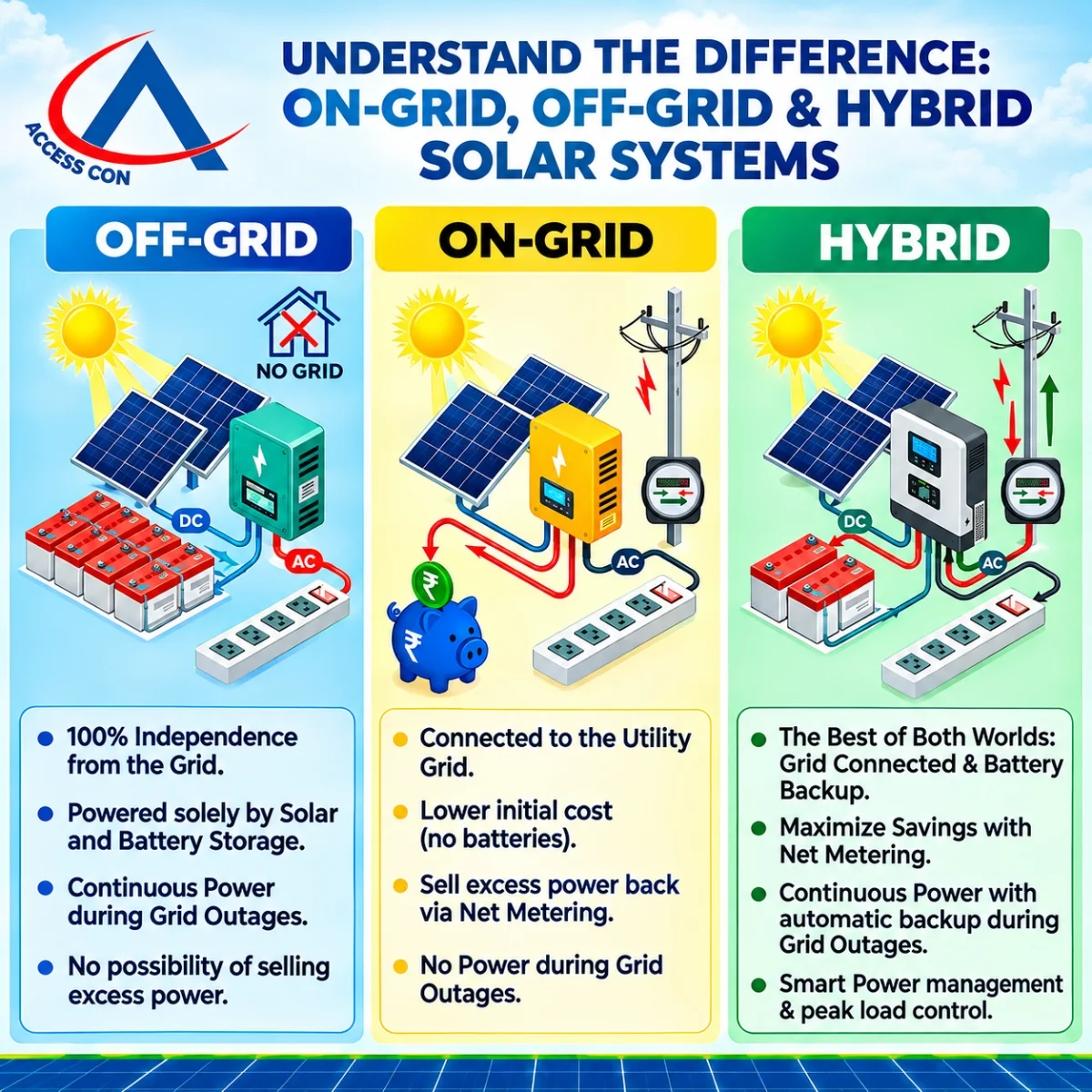
An off-grid solar system operates completely independently from the local utility power grid. It captures sunlight through high-efficiency solar modules, runs connected appliances directly during daylight hours, and stores all surplus energy in high-capacity battery banks. This setup delivers 100% self-reliant electricity for remote sites, farmhouses, rural areas, and locations across Jharkhand with zero grid access or severe power blackouts.
Key Benefits & Energy Independence:
100% Grid Independence: Generate and control your own independent power supply with zero reliance on local utility transmission lines.
Zero Electricity Bills: Eliminate recurring monthly utility power charges completely by generating all required power on-site.
Reliable Backup Anywhere: Ensure dependable energy delivery in remote rural locations, forest zones, and farms where grid infrastructure is unavailable or unstable.
Diesel Generator Replacement: Cut expensive, noisy diesel fuel running costs and emissions with silent solar-plus-storage operation.
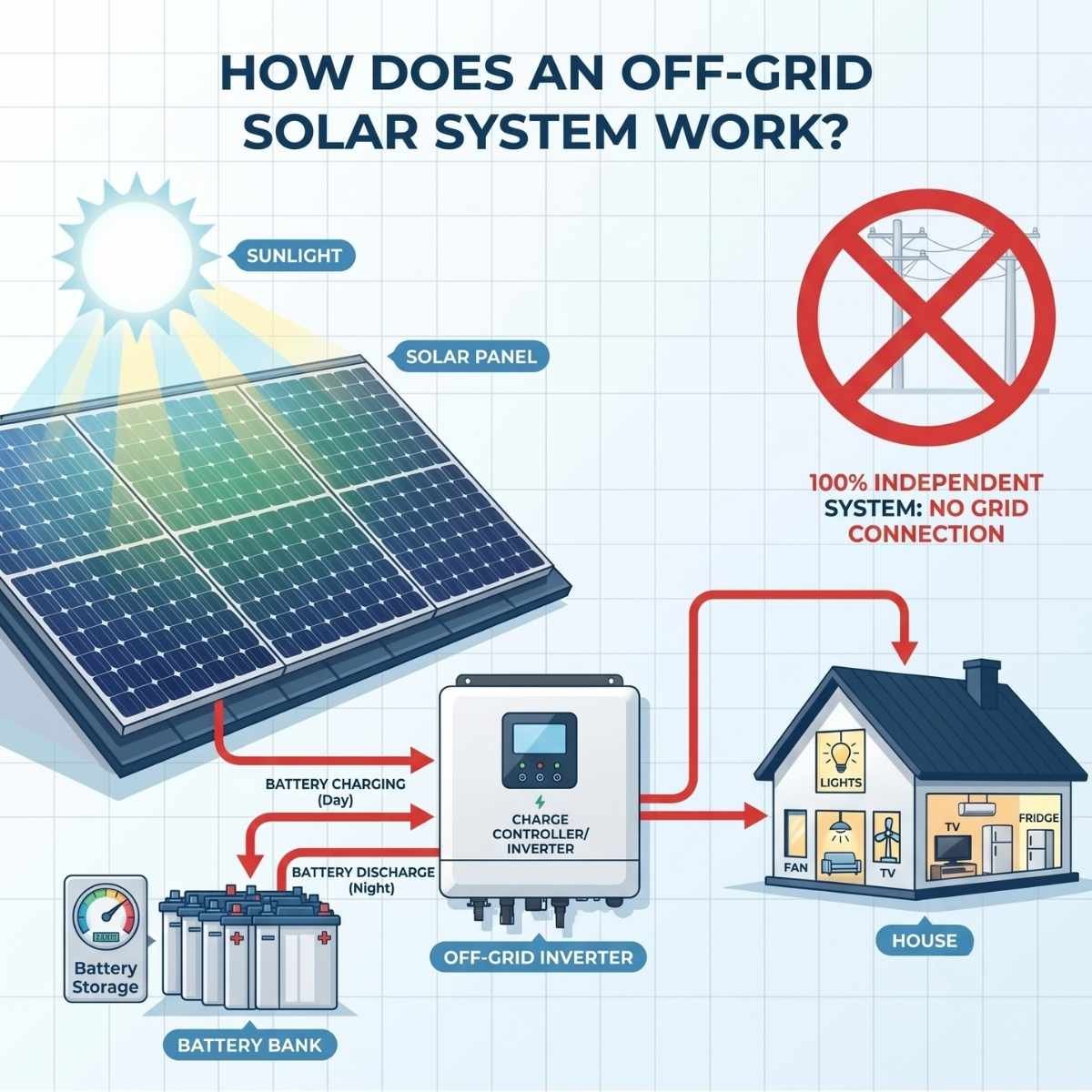
Solar Generation: High-efficiency solar panels capture direct sunlight and generate clean DC electricity throughout daytime hours.
MPPT Charge Control & Storage: A dedicated solar charge controller regulates power flow to run real-time appliances safely while charging the connected battery bank without overcharging.
Inverter Conversion: The off-grid solar inverter converts stored DC energy into standard AC electricity to run your household or commercial equipment round the clock.
- Initial load requirement analysis and battery sizing audit.
- Tailored off-grid design featuring heavy-duty deep-cycle battery banks.
- Certified installation of weather-resistant Tier-1 solar modules.
- Isolated AC distribution wiring and dedicated electrical earthing protection.
Capacity, Generation & Battery Backup (Off-Grid System)
| System Capacity | Daily Generation | Rooftop Space | Battery Bank Setup | Best Suited For |
|---|---|---|---|---|
| 3 kW Off-Grid | 12 - 14 Units / Day | Approx. 300 sq. ft. | 4 Batteries (48V) | Rural homes, lights, fans, TV & refrigerator |
| 5 kW Off-Grid | 20 - 24 Units / Day | Approx. 500 sq. ft. | 8 Batteries (96V) / Lithium | Farmhouses, small workshops & 1.5 Ton Inverter AC |
| 10 kW & Above | 40+ Units / Day | Approx. 1,000+ sq. ft. | High-capacity Bank / LiFePO4 | Remote resorts, petrol pumps & agricultural pumps |
How It Works
- Solar Daylight Power: Solar panels convert sunlight into DC electricity to run connected appliances directly during the day via the off-grid inverter.
- Heavy Battery Storage: Built-in MPPT charge controllers simultaneously fast-charge your deep-cycle battery bank with surplus power[cite: 7].
- 100% Autonomous Night Backup: During evening hours or prolonged bad weather, the inverter draws uninterrupted electricity strictly from your battery bank without requiring any utility grid connection[cite: 7].
Who Is It For?
Perfect for farmhouses, rural residences, remote project sites, and commercial facilities across Jharkhand where grid power is non-existent, highly erratic, or subject to severe voltage fluctuations, giving you complete energy independence without dependence on utility lines or diesel generators.
Can an off-grid solar system work without any electricity grid?
es, it is 100% self-sufficient. It generates power from sunlight during the day and stores excess energy in batteries to power your home seamlessly all night and during blackouts.
Is government subsidy available for off-grid solar systems?
No, central schemes like PM Surya Ghar apply exclusively to grid-connected setups. Off-grid systems do not qualify for central subsidies because they operate independently without net metering.
How long do the solar panels and batteries last?
Solar panels last 25 to 30 years with a 25-year performance warranty. Deep-cycle solar batteries typically last 5 to 8 years depending on battery type (tubular or lithium) and daily maintenance.
Can off-grid solar run heavy loads like motor pumps and ACs?
Yes, an appropriately sized off-grid setup (3 kW to 5 kW or higher) paired with heavy-duty inverters and sufficient battery banks easily runs 1.5-ton inverter ACs, water pumps, and refrigerators.
What happens during cloudy or continuous rainy days?
Solar modules continue producing power at reduced capacity under diffuse daylight. Off-grid battery banks are sized with 1–2 days of autonomy reserves, and systems can integrate generator inputs for emergencies.